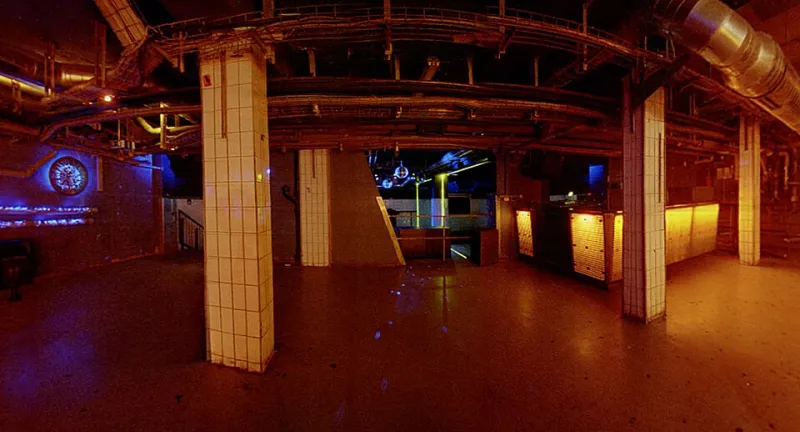
Back Room, Big Ears: Turning a Tuesday Pub Slot Into a Remix Test Kitchen
Photo: Steve Daniels , CC BY-SA 2.0, via Wikimedia Commons
Most DJ residencies are sold as a chance to play to a crowd. This one is sold as a chance to hear what your unfinished remix does when nobody is pretending to enjoy it. A Tuesday night in the back room of a UK pub is not a prestigious slot. That is exactly why it works. The stakes are low, the carpet is sticky, and the landlord is mostly interested in shifting a few more pints between quiz night and last orders. If your edit can survive that room, it can survive plenty.
Why Tuesday, Why the Back Room
Tuesday is the sweet spot. Friday and Saturday rooms want a party; Sunday wants a singalong; Monday wants nobody. Tuesday wants company. A landlord with a function room and a quiet midweek till will listen to a sensible pitch: one Tuesday a month, no door split, no big promises, and a promise to bring at least ten paying humans who will buy drinks and leave quietly.
Pitch it as a listening session with a beat, not a club night. Offer a three-month trial. Keep the flyer honest: ‘New remixes, unfinished business, cheap drinks.’ Do not call it a showcase. A showcase implies polish. You want the opposite: a place where a half-built club edit can be tested before you spend another three weekends polishing the wrong thing.
Build a Set From Unfinished Business
Do not play a normal DJ set. Build a lab sheet. Pick twelve to fifteen works-in-progress, each no longer than ninety seconds in your head. Label them by what they are testing: A for arrangement, B for low end, C for vocal placement, D for the drop. Put them on two USBs and take a backup of the backup.
Structure the hour like a gentle ascent. Start with two near-finished tracks that you trust, so the room settles into the idea that music is happening. Then move into the risky stuff. Put one untested edit next to one reliable edit. Never play three unknown sketches in a row. The room will forgive one odd turn; it will lose patience with a run of them.
Use transitions as tests, too. If a track only works when you slam it in, that is useful information. If it needs a sixteen-bar blend and a prayer, write that down. The back room will tell you which parts are doing the work and which parts are just decoration.
Reading the Room Without a Clipboard
The fastest way to kill a pub crowd is to stand there with a notebook, staring at people like a market researcher. Do not do that. Your job is to DJ, not to audit. Watch feet, not faces. Faces are polite; feet are honest. Watch the bar queue. If people drift towards the bar in the middle of your new bassline, that is a note. If they drift back when the chorus lands, that is another note.
Keep your phone in your pocket. After the set, voice-note three things: what filled the floor, what emptied it, and what got a confused but interested look. Ask the bar staff one question, not five. ‘Did that last one feel long?’ is better than ‘What did you think of the arrangement?’ Staff see the room from the side. They notice when people stop talking.
If you want a tiny bit of data, use symbols on your phone setlist: a tick, a cross, a question mark. No surveys. No QR codes. No clipboard. The residency is a conversation, not a focus group.
The Repeatable Release Cycle
The real value of the Tuesday slot is not the gig. It is the loop it creates. Month one: test rough ideas. Month two: play the same ideas after fixes. Month three: record the best version live and finish it. Month four: release one track and start again. That gives you a release cycle tied to a room, not to a mood.
Name your files properly. Keep a simple log: date, track, what changed, what happened. When a track gets a tick three months running, finish it. When it gets a cross twice, either rebuild it or bin it. The residency becomes a filter, and the filter becomes a catalogue.
Landlord Maths and Good Manners
Bring people who buy drinks. Pack down quietly. Share the poster yourself. Do not act like the back room owes you a career. If the pub has a quiz before you, wait until the quizmaster has finished the tie-break. If there is a darts match, do not unplug the scorer. These are not small details; they are the reason you get asked back.
A Tuesday back room will not make you famous. It will make you faster, less precious and harder to fool. That is worth more than another plugin.