Low-End Insurance: Building a Second Mix for UK Rooms That Swallow Bass

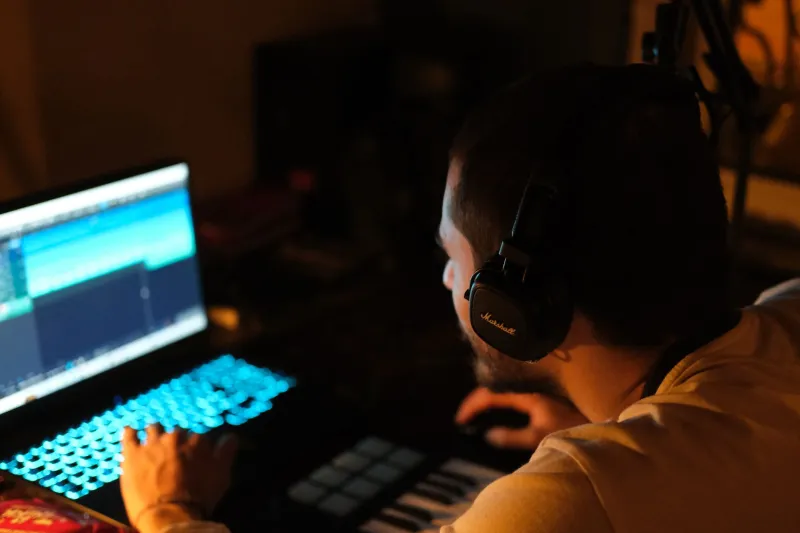
Photo: Elliott Brown from Birmingham, United Kingdom, CC BY-SA 2.0, via Wikimedia Commons
You finish the remix on a Wednesday, play it through your monitors, and everything is in its place: kick thumping, bassline rolling, hook floating. Then Friday comes, you hand it to a mate who runs a 120-cap basement bar off Brick Lane, and the whole thing turns into a rumble with a vocal somewhere on top. The sub has vanished. The bassline has become a vague warmth. The hook, which sounded huge at home, is now hiding behind a fridge door.
That is not a failure of your mix. It is a failure of translation. And in 2026, with UK clubland scattered across wet-led pubs, social clubs, low-ceiling basements and upstairs function rooms with one tired sub behind a pillar, you need more than one version of your track.
Why a second mix beats one impossible compromise
A tiny-room flip is not a radio edit. It is not a dub. It is not you admitting defeat. Think of it as low-end insurance: the same arrangement, the same vocal, the same hooks, but rebalanced so the track still communicates when the room cannot reproduce the bottom two octaves properly.
Keep your main mix for the rigs that deserve it. Build a second mix for the rooms that eat bass for breakfast. Name the files clearly — something like TRACKNAME_TINY_ROOM_FLIP_2026 — so you are not sending the wrong one to the wrong promoter at 11 p.m. on a Friday.
Start with the kick, not the bass
The instinct is to reach straight for the bass EQ. Resist it. In small rooms, the kick and bass are fighting for the same tiny piece of acoustic real estate, and the kick usually loses because its tail is too long.
Shorten the kick. Not so it sounds like a typewriter, but enough that it stops smearing into the bassline. Add a little click or beater around 2–5 kHz so the kick still reads on a small system. If your kick has a long sub tail, try a gentle high-pass around 30–40 Hz on the kick channel and see if the groove tightens. Often it does.
Then rebalance the bass. If your bass is mostly a clean sine, it will disappear on a rig with no sub. Add a harmonic layer — saturation, an octave-up copy, a filtered square — so the bassline has something to say in the low mids. Pull the sub down by 2–4 dB and let the harmonics carry the weight. If the bassline is a long sustained note, shorten it slightly or add a little movement so it does not turn into one continuous drone in a reflective room.
Move the hook into the mid-range
A hook that lives below 100 Hz is a hook that only works in a perfect room. In a basement bar with a low ceiling and a sub pointing at a wall, it is a rumour.
Duplicate your bass hook or main synth hook, high-pass it somewhere around 200–300 Hz, add saturation or a bit of drive, and blend it back in quietly. You are not trying to make it obvious. You are trying to give the ear a mid-range ghost of the hook so the brain can fill in the rest. The same goes for vocal hooks: make sure the presence region — roughly 2–6 kHz — is doing its job. If the vocal only sounds clear because of the sub, it will vanish in the back room.
Think of it as placing the hook where small speakers actually live. A phone, a laptop, a pub ceiling speaker and a car door all agree on the mid-range. They disagree violently about the sub.
Mono is your friend, not your enemy
Small rooms are often closer to mono than you think. Speakers are close together, walls are reflective, and the listening position is wherever the promoter could fit a table. If your remix relies on wide stereo bass or a huge side-channel hook, it can collapse when summed.
Keep everything below roughly 120 Hz mono. Check your mid/side balance and make sure the bass and kick are not canceling each other in mono. Use a correlation meter if you have one, but do not trust it blindly — use your ears on a single speaker. If the groove disappears when you hit the mono button, fix it now, not at the venue.
Widen the upper mids and highs if you want space. Leave the bottom end honest and centred.
The kitchen test
You do not need a studio to test a tiny-room flip. A kitchen is a brilliant reality check: hard surfaces, small space, no sub, and a fridge humming at 50 Hz. Play the mix from a phone or a laptop, walk around the room, and listen for what survives.
Does the kick still have a pulse? Can you hear the hook without straining? Does the bassline sound like a note or a fog? If the answer is fog, go back and shorten, saturate, or rebalance. The kitchen will not tell you how the track sounds on a festival rig, but it will tell you whether the idea is still there when the low end goes missing.
The car test, and the Vauxhall Corsa standard
A car cabin is basically a tiny room with a sealed sub and a lot of glass. It is also where a lot of UK DJs first hear their own mixes properly, usually on the way to a gig. Bluetooth the flip from your phone, keep the volume low, and listen.
If the bassline turns into a one-note drone, your notes are too long or your sub is too loud. If the kick disappears behind the bass, your sidechain or EQ balance needs work. If the hook is only audible when you turn it up, the mid-range ghost is not doing its job. And because many car systems sum to mono, it is another free mono check.
Do not rely on one car. Ask a mate with a different car. The Vauxhall Corsa standard is real: if it works there, it will probably work in a pub back room.
A quick workflow for the flip
- Duplicate the session and save it as a separate tiny-room version. Leave the main mix untouched.
- Shorten the kick and add a little click if needed.
- Split the bass into sub and mid-range layers. Saturate the mid layer. Reduce the sub by 2–4 dB.
- Add a quiet mid-range ghost of the main hook.
- Check mono compatibility and fix any cancellation.
- Test in the kitchen, in the car and on a phone speaker.
- A/B the flip against the main mix on the same system so you know what changed.
- Keep the arrangement identical. This is a translation tool, not a rework.
What to leave alone
Do not overcompress the flip. Do not scoop out all the low mids to make it sound clean on a laptop. Do not make it brittle just because small speakers are brittle. The tiny-room mix should still feel like the same track — same groove, same vocal, same personality — just more legible when the room refuses to cooperate.
And do not throw away the main mix. The best approach is to carry both: the big version for the rigs that can handle it, and the tiny-room flip for the back room of a Sheffield pub, the basement bar in Cardiff, the social club with the carpeted walls. That is not overthinking it. That is just good remix practice.