Three Minutes, No Flannel: Cutting a Club Remix Into a Radio Edit Your Nan Can Hum

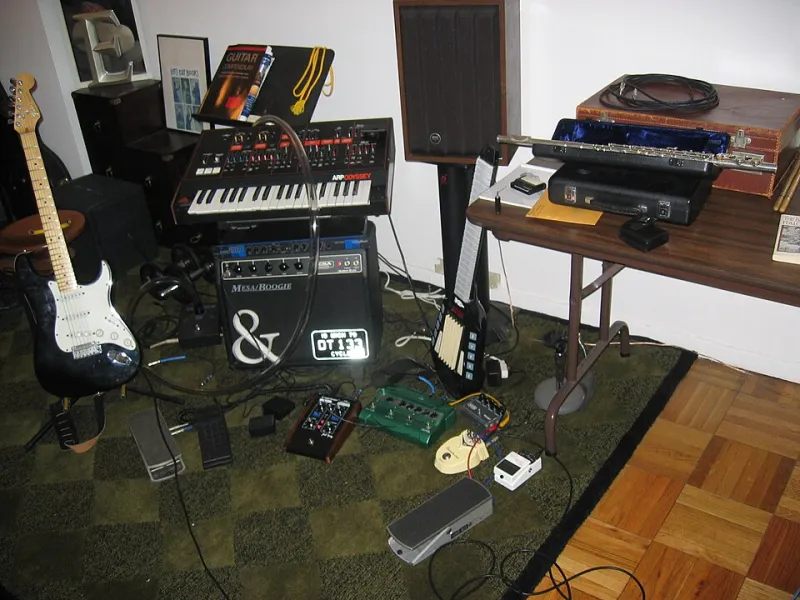
Photo: Charlie from United Kingdom, CC BY 2.0, via Wikimedia Commons
The Sunday Car Test
My nan does not go to clubs. She has never knowingly heard a sidechain compressor. She once described a garage shuffle as "the drums are doing a limp". She is, nonetheless, the most useful A&R I have.
Here's why. A radio edit has one job that a club mix doesn't: it has to be memorable on one listen, in bad conditions, with the listener half-distracted. That's a Sunday drive in a Nissan Micra with the heater on and Radio 2 fading in and out. If the hook survives that, it's a hook. If it doesn't, you've been polishing a texture and calling it a tune.
So this is a guide to making the three-minute version, and to using the least fashionable listening panel in Britain to check your work.
First: What a Radio Edit Is Actually For
Three purposes, in order of importance.
One, it gets played. Two, it gets remembered. Three, it sends people back to the club mix.
Notice what's not on the list: "it demonstrates your sound design". A radio edit is a delivery mechanism for the strongest four bars you wrote. Everything else is scaffolding. If you can't name your strongest four bars before you start cutting, that's your first job, and it isn't an editing job.
The Edit Map
Assume a 3:00 to 3:20 target. That's the practical ceiling for most UK community and online radio playlists, and it's long enough to feel like a record rather than a jingle. Here's the shape I use, adjustable to taste.
- 0:00–0:08 — The hook, cold. No riser, no filter sweep, no atmospheric throat-clearing. Start on the thing. Eight bars maximum, and if the hook is a vocal, start mid-phrase so it feels like you've walked in on something.
- 0:08–0:32 — First verse, drums in. The full groove arrives here, not later. Keep the low end.
- 0:32–0:48 — Pre / lift. One fill. One transition. Do not add a second build before the chorus.
- 0:48–1:16 — Chorus one. Full arrangement. This is the bit your nan should already know from the first eight seconds.
- 1:16–1:44 — Verse two, trimmed. Cut it to the best half. Nobody will notice, everybody will thank you.
- 1:44–2:12 — Chorus two, plus a small variation. A dropped kick, an extra vocal ad-lib, one new texture. Small.
- 2:12–2:32 — The eight-bar break. The only place an ambient passage belongs. Keep it to eight. Twelve if you're feeling brave and the vocal is carrying it.
- 2:32–3:00 — Final chorus, doubled. Vocals stacked, no new elements.
- 3:00–3:12 — Out. A short tag, a repeat of the hook, a hard stop. No two-minute outro. Radio doesn't have a two-minute outro.
That's rough, not sacred. What is sacred: the hook appears in the first eight seconds and the first chorus lands before the minute mark.
The Five Mistakes That Flatten It
1. Fading the drums out at the start. This is the classic. Producers assume a soft intro makes an edit feel radio-friendly. It just makes it feel like it hasn't started. Drumless intros buy you nothing and cost you the first eight bars.
2. Stripping the bass to "clean it up". Radio isn't a format, it's a set of speakers — mostly small, mostly plastic. Cutting everything below 100Hz doesn't help those speakers, it just makes the track sound thin on the good ones. Manage the low end, don't remove it.
3. Squashing the life out of it. Loudness-normalised playback means your brickwalled edit isn't louder than the next track, it's just flatter. Leave headroom, let the chorus be louder than the verse, and trust that the difference is the point.
4. Cutting the intro and calling it a day. A six-minute club remix with the first two minutes removed is still a six-minute remix. The edit is a rebuild, not a crop.
5. Losing the ad-libs. Those little dropped syllables and breaths are what stop a vocal sounding like a MIDI file. If you're trimming, trim the instrumental, not the human.
The Nan Test, Properly Done
Here's the protocol. It takes twenty minutes and it's more honest than most feedback you'll get from other producers.
Step one. Bounce the edit and the club mix. Name the files something neutral. Do not tell anyone which is which, or what you were going for.
Step two. Play the edit on a phone speaker in the kitchen while something is cooking. If your nan is in the room, so much the better. Don't watch her face — that's a trap. Listen for whether she hums. Humming is the data.
Step three. Play it in the car with the windows down at 40mph. If the vocal hook disappears under road noise, it's too quiet in the midrange, or too busy. Go back to the arrangement, not the EQ.
Step four. Ask one question: "Could you sing me the bit you remember?" Whatever she hums is your actual hook. If it's not the bit you thought it was, you've learned something cheap. If she can't hum anything, you don't have an edit. You have a mixdown.
The Bit Where It's Not Selling Out
There's a snobbery in clubland about the three-minute version, as if making something hummable is a concession. It's backwards. The short version is the harder job. You have to know which bars are load-bearing, you have to be ruthless about your own favourite section, and you have to accept that a texture you spent three evenings on is, in this version, scenery.
If your nan can hum it, the core works. If the core works, the club mix has something to lean on. And if she says the drums are doing a limp — that's just the shuffle, Nan. It's meant to do that.
One last practical note: always keep the club mix and the radio edit from the same session and the same master chain, aside from the length and the loudness. Nothing kills a release faster than an edit that sounds like it came from a different producer.