Three Hours, One Moorland Recorder: The 2026 Yorkshire Sample Flip Challenge
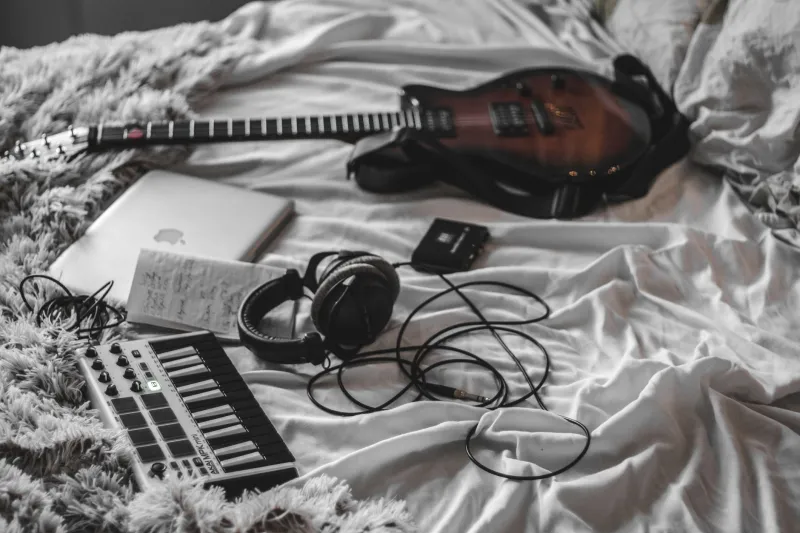
Saturday afternoon, 7 November 2026. You have a laptop, headphones and three hours before tea. The brief: take a legally sourced Yorkshire folk field recording and turn it into something that would move a warehouse crowd. Not a polite edit. Not a museum piece. A banger with brass on its breath and moorland wind in the reverb.
Welcome to The Remix Company's 2026 Sample Flip Challenge. We are not asking you to sample a commercial brass band record and hope nobody notices. We are asking you to source a legal UK field recording—your own capture, a licensed library or a performer-approved session—and flip it beyond recognition. Think colliery brass stabs, dialect snippets, rain on a Barnsley rooftop, wind over Ilkley Moor. Then build a UK garage or breakbeat arrangement around it.
Start with the licence, not the DAW
Before you touch a warp marker, sort the paperwork. A field recording is not automatically fair game because it is outdoors. Work through this checklist:
- Get permission from the person who recorded it and, where relevant, the performers. A brass band is a group of performers, not a free sample pack.
- Clear the site. If you record on private land, a National Trust property or a nature reserve, check access and recording rules.
- Treat speech carefully. If a dialect interview includes a named person, get consent for the recording to be used in a remix and keep that consent in writing.
- Understand the licence. Creative Commons is not a free-for-all; check attribution, commercial-use and remix terms.
- Do not assume a PRS or PPL venue licence covers sampling. It does not give you the right to chop a commercial record into your track.
- Keep a paper trail: recordist name, date, location, permission emails, licence PDFs and stem exports. If a contest asks you to prove clearance, you will be glad you did.
This is practical advice, not legal advice. If you are using a major release or a paid library with murky terms, ask before you upload.
Hour one: find the four-second gold
Set a timer. Import your field recording at your session sample rate—44.1 kHz or 48 kHz is fine—and listen for one usable moment. Do not fall in love with the whole file.
In Ableton Live, drop the audio into Arrangement View, warp it in Complex or Texture mode and hunt for a phrase with a clear transient. In Logic Pro, use Flex Time or Quick Sampler to isolate the same moment. A brass band run-through might give you a single blunt note or a breathy chord. A dialect recording might give you a vowel, a consonant or a laugh. Moorland ambience might give you wind, footsteps, a gate click or rain on a hood.
Make three folders: tonal, percussion and texture. Pitch a brass stab down an octave for weight. Pitch a dialect vowel up five semitones for a strange hook. Take a moorland gust and loop it until it becomes a pad. Your goal is not to preserve the source. Your goal is to make it behave like a sample.
Hour two: chop, pitch and resample
Ableton producers: load your chosen slice into Simpler or Sampler. Slice by transient, set a short fade and map the best three hits to a Drum Rack. Logic producers: Quick Sampler is your friend, especially with the transient and slice modes. Do not over-slice. Three good hits beat sixteen mush.
Now resample. Print a one-bar loop with a little room reverb, a delay or a filter sweep. Chop that printed loop, reverse it, gate it and pitch it. Rhythmic resampling is where a field recording stops being a document and starts being a groove. Try printing a bar at half speed, then playing it back double speed. Try a stutter edit on a brass note so it becomes a UK garage skip.
For a UK garage feel, aim around 132 BPM, leave gaps in the kick pattern, shuffle the 16th-note hats and keep the sub bass mono. Use a rimshot or a field-recording click as your snare layer. For a breakbeat feel, chop a percussion texture into a two-bar break, then layer an 808 under the first hit. You can hybridise the two: a 2-step garage pulse with a broken, rave-ready second half.
Hour three: arrangement and warehouse mix
Arrangement is where most flips fall apart. Do not stack every idea into the first eight bars. Build a 16-bar intro, a short filter build and a drop at roughly one minute. Let the vocal or dialect hook appear once, disappear, then return with more weight. Switch the groove halfway through—garage to breakbeat, or breakbeat to a four-to-the-floor warehouse stomp—so the track has a second life.
Mix at low volume. High-pass the pads, keep the sub mono, check the midrange on a phone speaker and make sure the brass or voice still cuts through. Do not crush the master with a limiter just to win a loudness contest. Leave headroom. Print an instrumental, a stripped version and a short clip for socials.
The Remix Company feedback shout-out
Upload your flip by 30 November 2026 and tag it #RemixCompanyFlip. We will pick three entries for a feedback shout-out in December—no trophy, no major-label cheque, just honest notes and a bit of dancefloor mischief. Keep your stems and licence documents handy. If we share your flip, we will credit you and the recordist.
Three-hour checklist
- One legal source, documented.
- Three folders: tonal, percussion, texture.
- One four-second hero slice.
- One resampled rhythmic loop.
- One UK garage or breakbeat arrangement.
- One drop, one switch, one ending.
- One phone-speaker check.
Three hours is enough to make a sketch. Make it a bold one.